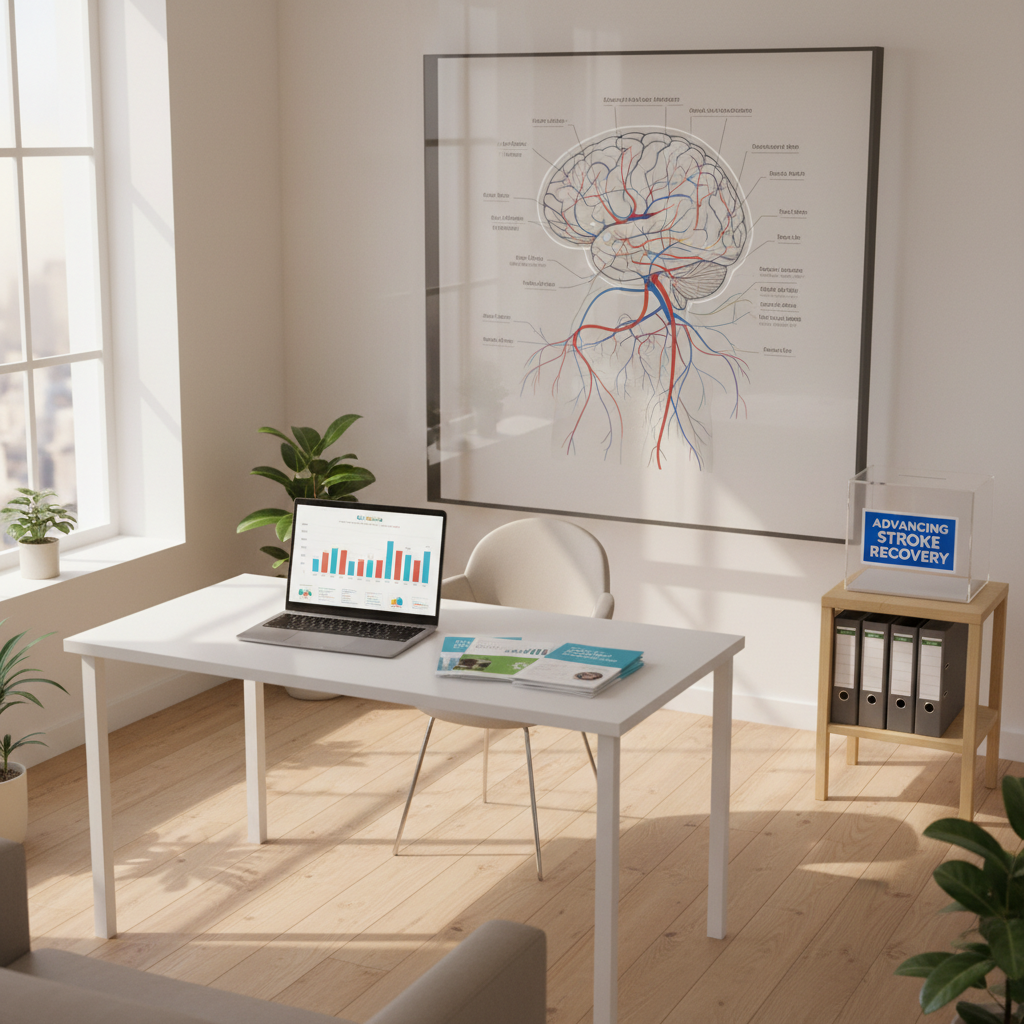
A bright, modern nonprofit office dedicated to stroke recovery programs, with a central white desk holding a slim laptop displaying charts of rehabilitation outcomes, next to a stack of neatly printed educational brochures about post-stroke care. On the wall behind the desk hangs a large framed infographic of the brain’s blood vessels and recovery pathways. A donation box labeled “Advancing Stroke Recovery” sits on a side table along with neatly organized grant folders. Natural daylight streams in from a side window, illuminating the room with a soft, optimistic glow. Captured in photographic realism from a slightly elevated, wide-angle perspective, the image conveys transparency, professionalism, and organized impact-driven work.

Support Recovery

Your generosity powers innovative stroke care, rehabilitation, and hope for survivors and their families.

Giving

Choose a meaningful gift level and see how your donation turns into real hours of care for stroke survivors.

Starter Impact

$50

Therapy hour

Resource toolkit

Stronger Steps

$100

Group therapy

Caregiver training

Transportation support

Home adaptations

Follow-up nursing visits

Lifetime Impact

$250

Intensive therapy

Specialist consults

Family counseling

Adaptive technology

Long-term rehab planning

Research funding

Nationwide outreach

Donate online

Make a secure gift in minutes and help expand life-changing stroke recovery programs across communities.

← Back

Thank you for your response. ✨

Stories

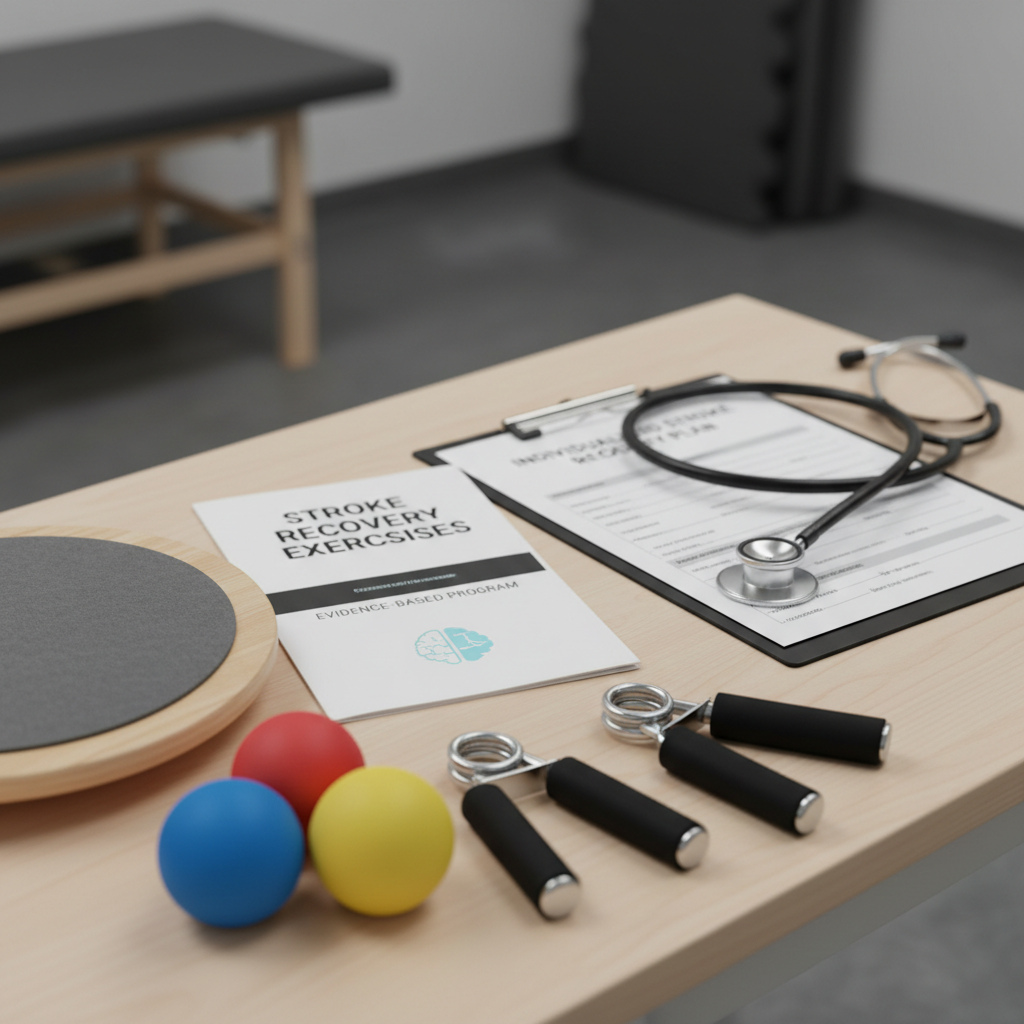
A close-up of a neatly arranged stroke recovery toolkit on a light wood rehabilitation table: color-coded foam therapy balls, a sturdy balance board, adjustable hand grip strengtheners, and a printed evidence-based exercise guide branded subtly with a small, simple heart-and-brain icon. A stethoscope and a clean clipboard with a stroke recovery plan lie nearby, their metal and paper textures clearly visible. Soft, diffused overhead lighting creates minimal shadows and a professional, clinical feel. Captured from a slightly elevated angle with shallow depth of field, the foreground tools are in sharp photographic focus while the background therapy room fades into a gentle blur, emphasizing preparedness, organization, and high-quality post-stroke care.

Hope D.

After my husband’s stroke, this foundation funded extra therapy sessions that helped him speak again and return to family dinners.

A bright, modern nonprofit office dedicated to stroke recovery programs, with a central white desk holding a slim laptop displaying charts of rehabilitation outcomes, next to a stack of neatly printed educational brochures about post-stroke care. On the wall behind the desk hangs a large framed infographic of the brain’s blood vessels and recovery pathways. A donation box labeled “Advancing Stroke Recovery” sits on a side table along with neatly organized grant folders. Natural daylight streams in from a side window, illuminating the room with a soft, optimistic glow. Captured in photographic realism from a slightly elevated, wide-angle perspective, the image conveys transparency, professionalism, and organized impact-driven work.

Hope D.

Grants from the David Allen Foundation allowed our small clinic to launch a dedicated stroke rehab program for underserved patients.

A close-up of a neatly arranged stroke recovery toolkit on a light wood rehabilitation table: color-coded foam therapy balls, a sturdy balance board, adjustable hand grip strengtheners, and a printed evidence-based exercise guide branded subtly with a small, simple heart-and-brain icon. A stethoscope and a clean clipboard with a stroke recovery plan lie nearby, their metal and paper textures clearly visible. Soft, diffused overhead lighting creates minimal shadows and a professional, clinical feel. Captured from a slightly elevated angle with shallow depth of field, the foreground tools are in sharp photographic focus while the background therapy room fades into a gentle blur, emphasizing preparedness, organization, and high-quality post-stroke care.

Hope D.

As a young survivor, joining their community workshops reduced my isolation and gave me tools to manage daily challenges.

A bright, modern nonprofit office dedicated to stroke recovery programs, with a central white desk holding a slim laptop displaying charts of rehabilitation outcomes, next to a stack of neatly printed educational brochures about post-stroke care. On the wall behind the desk hangs a large framed infographic of the brain’s blood vessels and recovery pathways. A donation box labeled “Advancing Stroke Recovery” sits on a side table along with neatly organized grant folders. Natural daylight streams in from a side window, illuminating the room with a soft, optimistic glow. Captured in photographic realism from a slightly elevated, wide-angle perspective, the image conveys transparency, professionalism, and organized impact-driven work.

Hope D.

The education materials they provide helped me understand my dad’s recovery plan and advocate confidently during medical appointments.

Is this your new site? Log in to activate admin features and dismiss this message
Log In