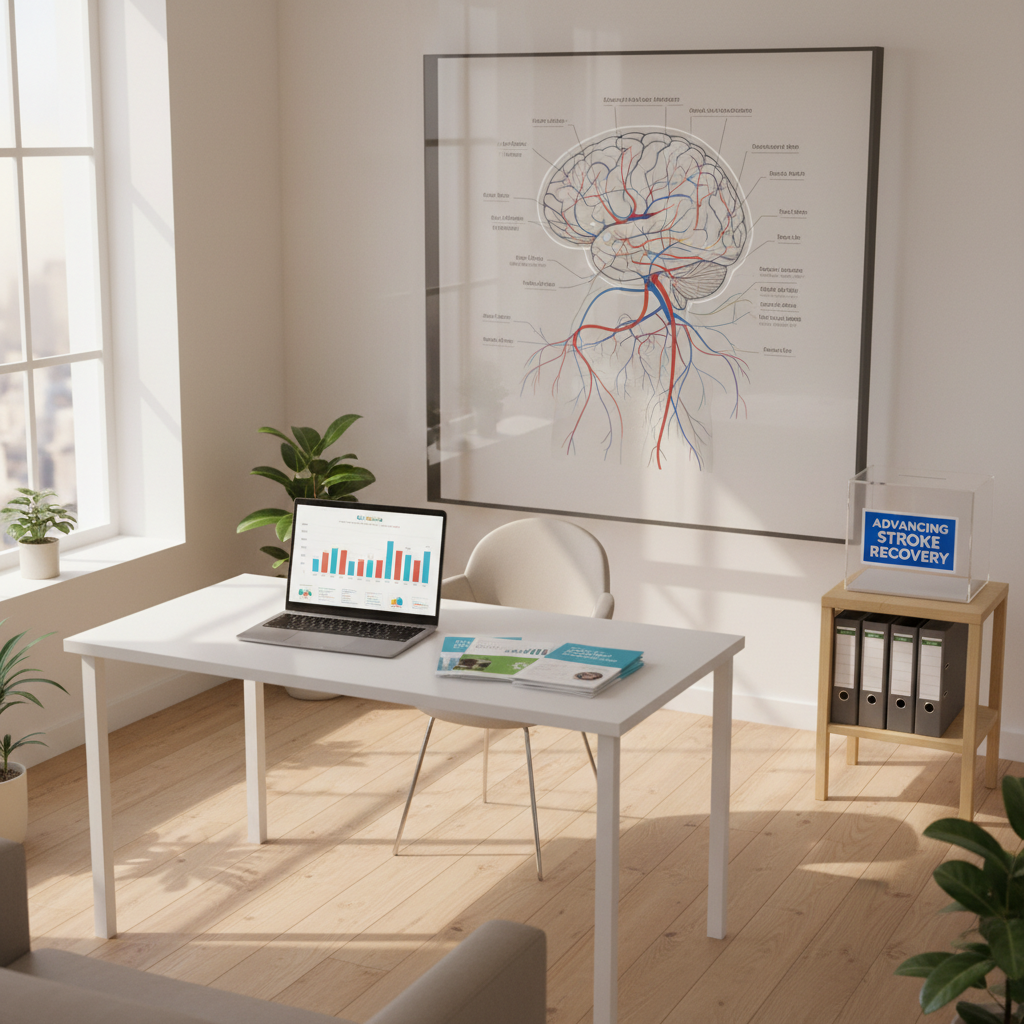
A bright, modern nonprofit office dedicated to stroke recovery programs, with a central white desk holding a slim laptop displaying charts of rehabilitation outcomes, next to a stack of neatly printed educational brochures about post-stroke care. On the wall behind the desk hangs a large framed infographic of the brain’s blood vessels and recovery pathways. A donation box labeled “Advancing Stroke Recovery” sits on a side table along with neatly organized grant folders. Natural daylight streams in from a side window, illuminating the room with a soft, optimistic glow. Captured in photographic realism from a slightly elevated, wide-angle perspective, the image conveys transparency, professionalism, and organized impact-driven work.

Our Story

Discover how we champion stroke recovery through research funding, clinician training, and survivor-centered support.

About

The David Allen Foundation advances life after stroke by funding innovative rehabilitation, partnering with leading medical experts, and equipping survivors, families, and clinicians with evidence-based tools that restore independence, dignity, and long-term quality of life.
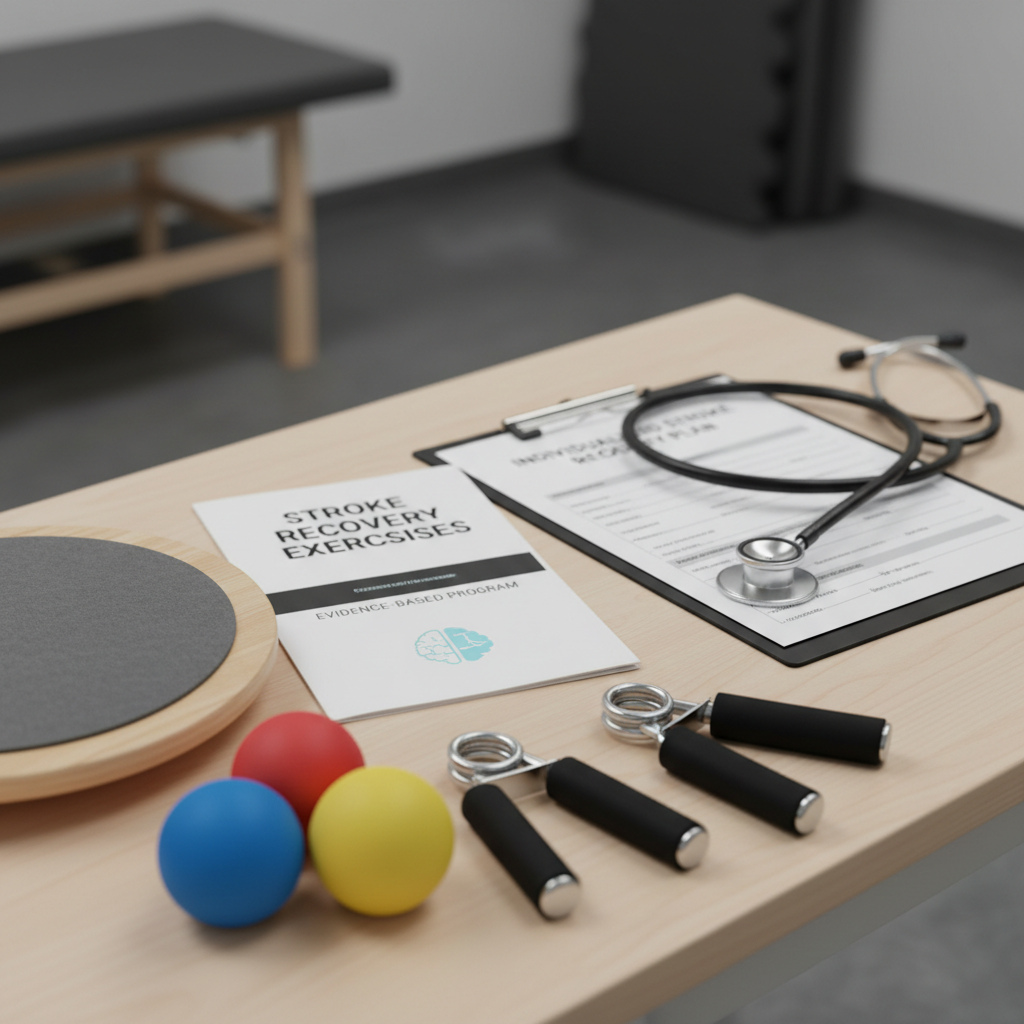
A close-up of a neatly arranged stroke recovery toolkit on a light wood rehabilitation table: color-coded foam therapy balls, a sturdy balance board, adjustable hand grip strengtheners, and a printed evidence-based exercise guide branded subtly with a small, simple heart-and-brain icon. A stethoscope and a clean clipboard with a stroke recovery plan lie nearby, their metal and paper textures clearly visible. Soft, diffused overhead lighting creates minimal shadows and a professional, clinical feel. Captured from a slightly elevated angle with shallow depth of field, the foreground tools are in sharp photographic focus while the background therapy room fades into a gentle blur, emphasizing preparedness, organization, and high-quality post-stroke care.

Leadership Team

A bright, modern nonprofit office dedicated to stroke recovery programs, with a central white desk holding a slim laptop displaying charts of rehabilitation outcomes, next to a stack of neatly printed educational brochures about post-stroke care. On the wall behind the desk hangs a large framed infographic of the brain’s blood vessels and recovery pathways. A donation box labeled “Advancing Stroke Recovery” sits on a side table along with neatly organized grant folders. Natural daylight streams in from a side window, illuminating the room with a soft, optimistic glow. Captured in photographic realism from a slightly elevated, wide-angle perspective, the image conveys transparency, professionalism, and organized impact-driven work.

Aarav Sharma

CEO

A close-up of a neatly arranged stroke recovery toolkit on a light wood rehabilitation table: color-coded foam therapy balls, a sturdy balance board, adjustable hand grip strengtheners, and a printed evidence-based exercise guide branded subtly with a small, simple heart-and-brain icon. A stethoscope and a clean clipboard with a stroke recovery plan lie nearby, their metal and paper textures clearly visible. Soft, diffused overhead lighting creates minimal shadows and a professional, clinical feel. Captured from a slightly elevated angle with shallow depth of field, the foreground tools are in sharp photographic focus while the background therapy room fades into a gentle blur, emphasizing preparedness, organization, and high-quality post-stroke care.

Mateo García

CTO

A bright, modern nonprofit office dedicated to stroke recovery programs, with a central white desk holding a slim laptop displaying charts of rehabilitation outcomes, next to a stack of neatly printed educational brochures about post-stroke care. On the wall behind the desk hangs a large framed infographic of the brain’s blood vessels and recovery pathways. A donation box labeled “Advancing Stroke Recovery” sits on a side table along with neatly organized grant folders. Natural daylight streams in from a side window, illuminating the room with a soft, optimistic glow. Captured in photographic realism from a slightly elevated, wide-angle perspective, the image conveys transparency, professionalism, and organized impact-driven work.

Zuri Ndlovu

Developer

A close-up of a neatly arranged stroke recovery toolkit on a light wood rehabilitation table: color-coded foam therapy balls, a sturdy balance board, adjustable hand grip strengtheners, and a printed evidence-based exercise guide branded subtly with a small, simple heart-and-brain icon. A stethoscope and a clean clipboard with a stroke recovery plan lie nearby, their metal and paper textures clearly visible. Soft, diffused overhead lighting creates minimal shadows and a professional, clinical feel. Captured from a slightly elevated angle with shallow depth of field, the foreground tools are in sharp photographic focus while the background therapy room fades into a gentle blur, emphasizing preparedness, organization, and high-quality post-stroke care.

Leila Haddad

Designer

A bright, modern nonprofit office dedicated to stroke recovery programs, with a central white desk holding a slim laptop displaying charts of rehabilitation outcomes, next to a stack of neatly printed educational brochures about post-stroke care. On the wall behind the desk hangs a large framed infographic of the brain’s blood vessels and recovery pathways. A donation box labeled “Advancing Stroke Recovery” sits on a side table along with neatly organized grant folders. Natural daylight streams in from a side window, illuminating the room with a soft, optimistic glow. Captured in photographic realism from a slightly elevated, wide-angle perspective, the image conveys transparency, professionalism, and organized impact-driven work.

Hiroshi Tanaka

Marketing

A close-up of a neatly arranged stroke recovery toolkit on a light wood rehabilitation table: color-coded foam therapy balls, a sturdy balance board, adjustable hand grip strengtheners, and a printed evidence-based exercise guide branded subtly with a small, simple heart-and-brain icon. A stethoscope and a clean clipboard with a stroke recovery plan lie nearby, their metal and paper textures clearly visible. Soft, diffused overhead lighting creates minimal shadows and a professional, clinical feel. Captured from a slightly elevated angle with shallow depth of field, the foreground tools are in sharp photographic focus while the background therapy room fades into a gentle blur, emphasizing preparedness, organization, and high-quality post-stroke care.

Amara Okafor

Social

A bright, modern nonprofit office dedicated to stroke recovery programs, with a central white desk holding a slim laptop displaying charts of rehabilitation outcomes, next to a stack of neatly printed educational brochures about post-stroke care. On the wall behind the desk hangs a large framed infographic of the brain’s blood vessels and recovery pathways. A donation box labeled “Advancing Stroke Recovery” sits on a side table along with neatly organized grant folders. Natural daylight streams in from a side window, illuminating the room with a soft, optimistic glow. Captured in photographic realism from a slightly elevated, wide-angle perspective, the image conveys transparency, professionalism, and organized impact-driven work.
A close-up of a neatly arranged stroke recovery toolkit on a light wood rehabilitation table: color-coded foam therapy balls, a sturdy balance board, adjustable hand grip strengtheners, and a printed evidence-based exercise guide branded subtly with a small, simple heart-and-brain icon. A stethoscope and a clean clipboard with a stroke recovery plan lie nearby, their metal and paper textures clearly visible. Soft, diffused overhead lighting creates minimal shadows and a professional, clinical feel. Captured from a slightly elevated angle with shallow depth of field, the foreground tools are in sharp photographic focus while the background therapy room fades into a gentle blur, emphasizing preparedness, organization, and high-quality post-stroke care.
A bright, modern nonprofit office dedicated to stroke recovery programs, with a central white desk holding a slim laptop displaying charts of rehabilitation outcomes, next to a stack of neatly printed educational brochures about post-stroke care. On the wall behind the desk hangs a large framed infographic of the brain’s blood vessels and recovery pathways. A donation box labeled “Advancing Stroke Recovery” sits on a side table along with neatly organized grant folders. Natural daylight streams in from a side window, illuminating the room with a soft, optimistic glow. Captured in photographic realism from a slightly elevated, wide-angle perspective, the image conveys transparency, professionalism, and organized impact-driven work.
Is this your new site? Log in to activate admin features and dismiss this message
Log In